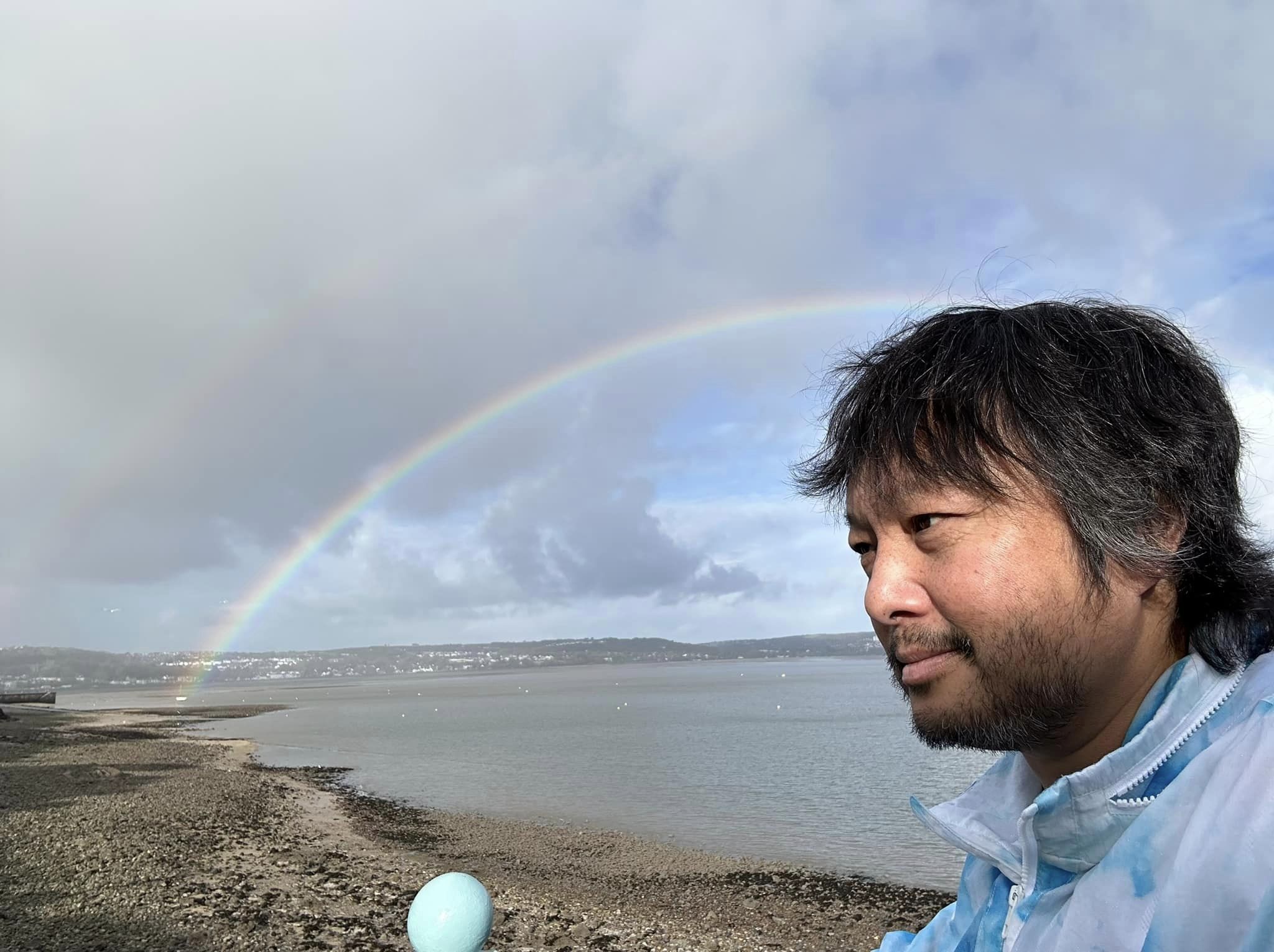
SCUD
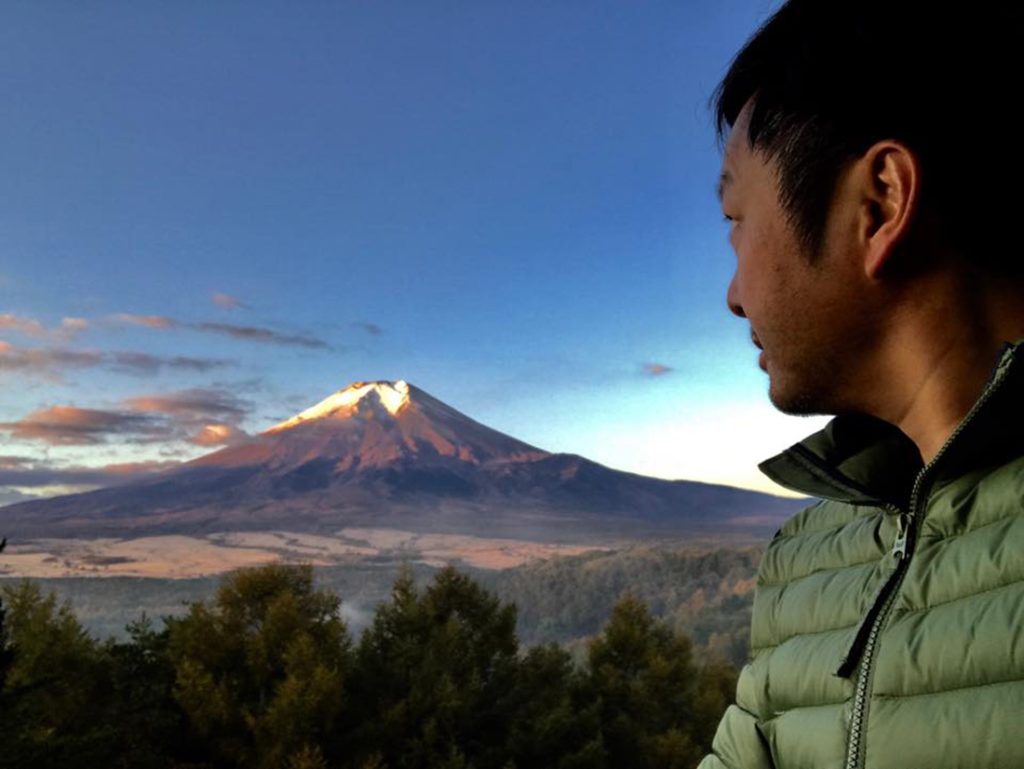
SCUD, a film writer, producer and director, was born in China and moved to Hong Kong as a teenager. After 20 years’ working in the IT industry, he immigrated to Australia, but then returned to Asia to found Artwalker, a studio making numerous controversial yet acclaimed independent films.
“Permanent Residence” was the opening film of the 33th Hong Kong International Film Festival (HKIFF), while “Amphetamine “, also a Berlinale official selection, was the closing film of the subsequent year.
“Voyage” received an “Artistic Achievement Award” from the 49th Chicago International Film Festival and SCUD was the tribute honoree and the first ever Q-Hugo Award recipient.
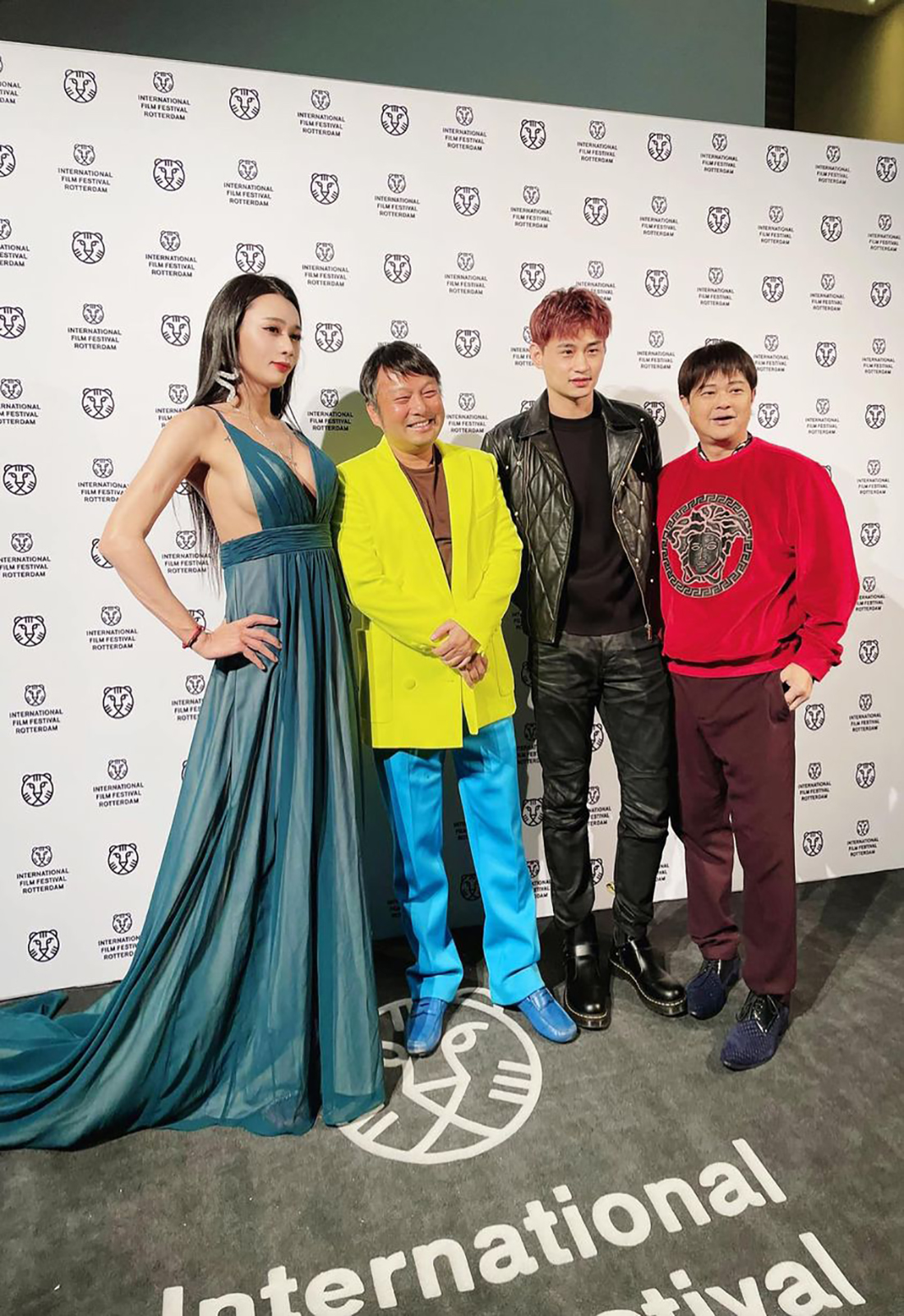
International Film Festival of Rotterdam (IFFR) will, in the 53rd edition, celebrate the filmmaker by a “Focus: Scud” program, a full retrospective of all 10 films in his career.
Filmography
City Without Baseball (2008)
Permanent Residence (2009)
Amphetamine (2010)
Love actually…sucks! (2011)
Voyage (2013)
Utopians (2015)
Adonis, aka Thirty Years of Adonis (2017)
Apostles (2022)
Bodyshop (2022)
Naked Nations – Tribe Hong Kong (2024)
Plato vs Pasolini (in progress)
Ghosts just want to have fun (in progress)
Having traveled 100 countries, SCUD left Hong Kong again after shooting the last film, now takes residences in Thailand, Japan, Taiwan and Australia.
<<<
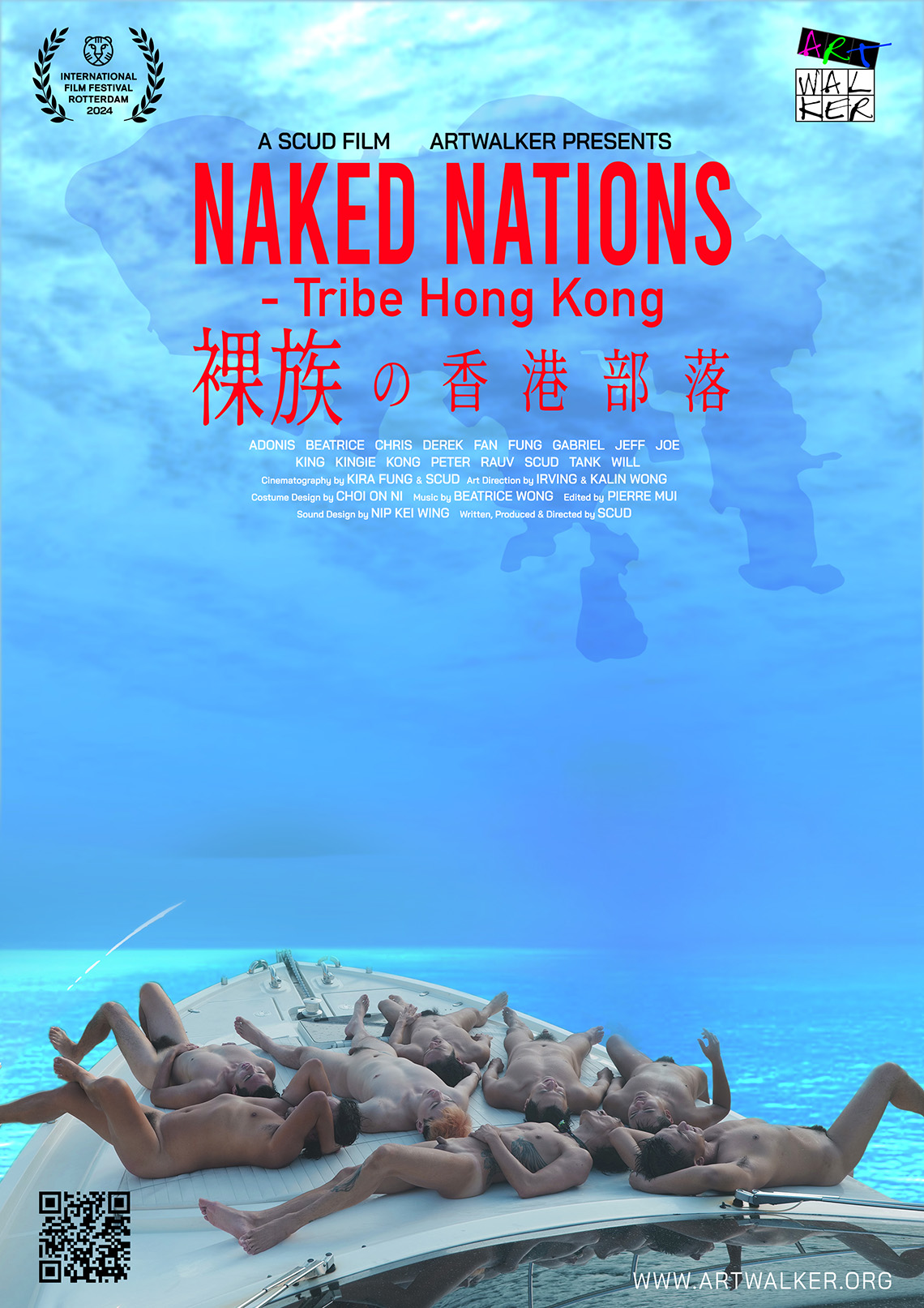
Naked Nations – Tribe Hong Kong
Almost leaving filmmaking behind after Utopians(2016), and then after Apostles (2022) and again after Bodyshop(2022), incessantly stubborn Scud ended up fulfilling his prophecy jokingly uttered to Osman Hung when he was casting him as the lead of Permanent Residence(2008): Naked Nations – Tribe Hong Kong is Scud’s tenth film leaving no doubts it is his goodbye to filmmaking, and his last dedication to the art, the place and the people he loves.
Produced over the past three or so years, Naked Nations functions as a drama, a making-of, a documentary and an act of defiance. It is a film about people who have lost and re-found hope, and those who managed to always hold on to it. Scud invites his collaborators from previous films, states his case and faces the final curtain, and this time he’s the one stripping down, confirming once and for all that this attitude was never merely pretence.
Naked Nations is a deeply human, joyful, poignant and heartbreaking film about freedom and its many manifestations, fragility and limits, a film about life, depression and difficult decisions. But above all, a film about love.
 >>>
>>>
Bodyshop
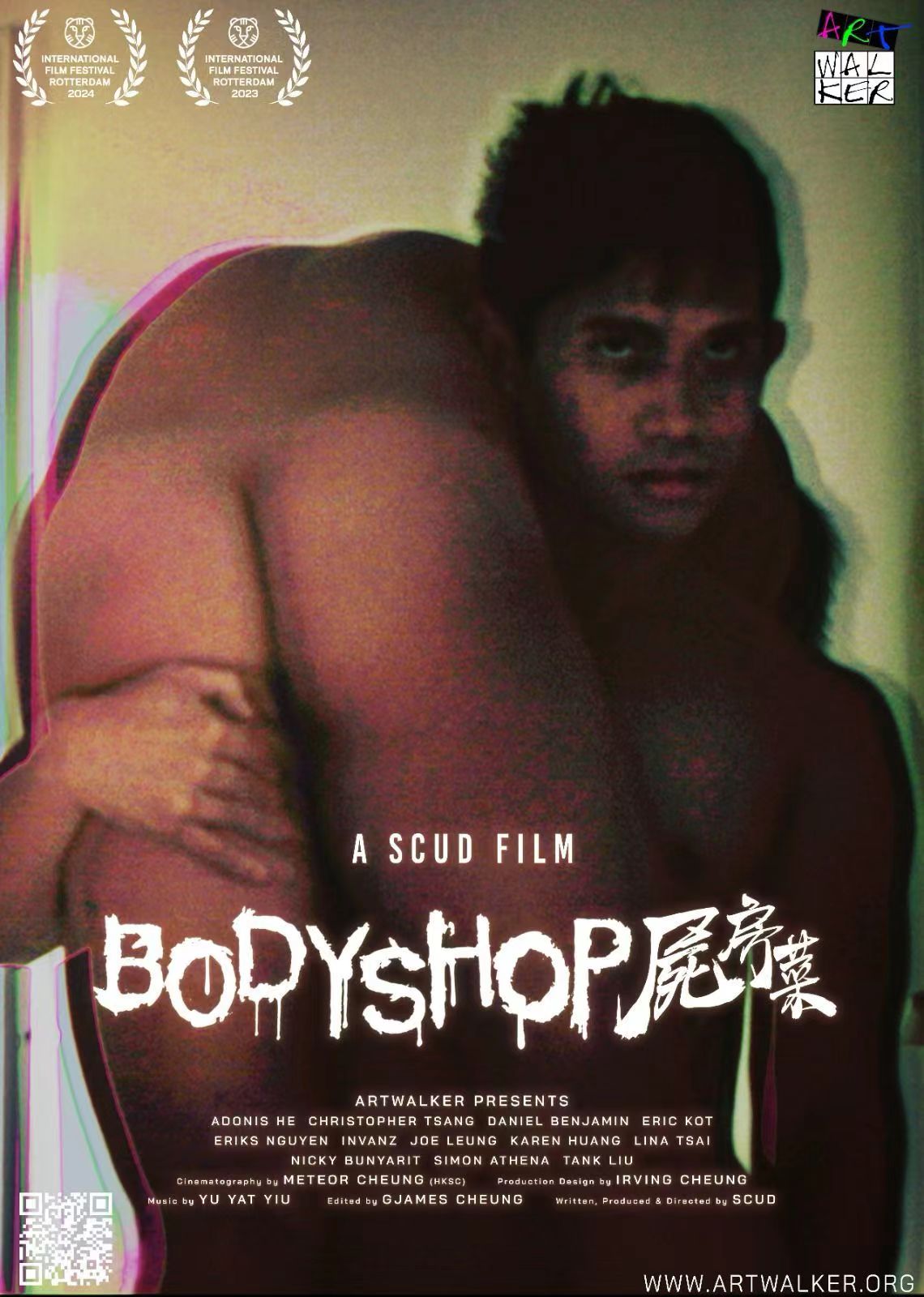
The horny ghost of a young man traverses the globe, stalking and debating with his past lovers.
Scud is interested in the overlap between tradition and modernity, and the ways of spirituality vis-à-vis technology. He uses clips from his previous works, mainly Thirty Years of Adonis (2017), to blur the ever-so-fragile line between documentary and fiction, the actors and their roles. The characters, ghostly and living alike, carry their stories and in them, we hear powerful statements about the lingering effects of personal, social and political trauma.
Bodyshop is a work of subversion that takes scenes of uninhibited sex and musical interludes as its tools to dare us to think the unthinkable. It doesn’t shy away from suicide, violence or love expressed cannibalistically, calling out issues from the spheres of intimate relations to politics at large. Scud conjures a type of cinema that intermingles Pier Paolo Pasolini, Peter Greenaway and John Waters.
On the one hand, Bodyshop is defiantly offhand and proudly camp at its narrative core. On the other, the film is as slick as a TV commercial, thanks to an unmistakably digital sheen and a syrupy soundtrack.
<<<
Apostles
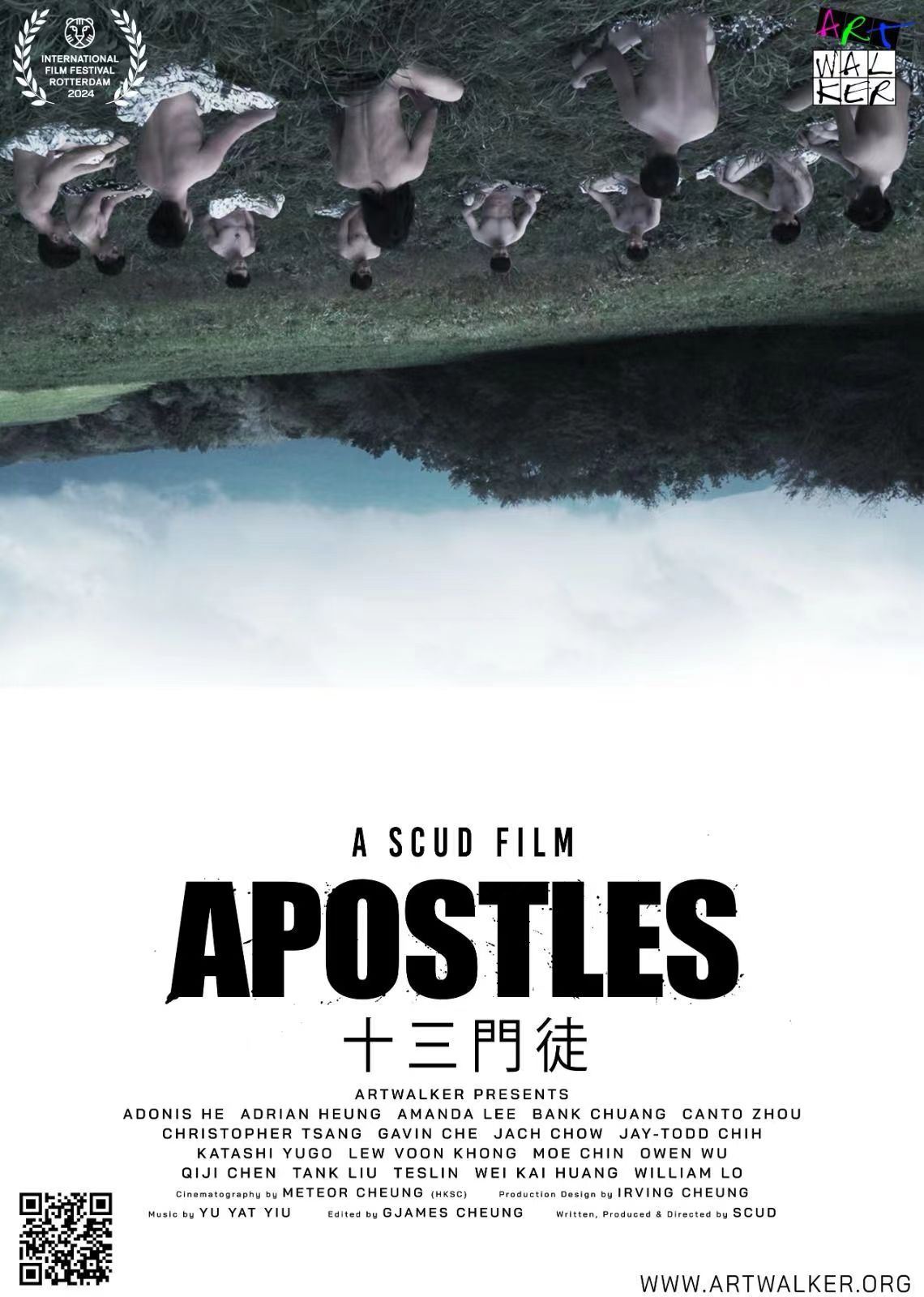
Once again drawing from a very personal place, Scud’s eighth film Apostles does away with a certain kind of nostalgia. As in Voyage(2012), Utopians (2016) and Thirty Years of Adonis(2017), Apostles reaches into the deep and dark crevices of the human mind to reflect on the meaning and value of life by exploring death and what comes after. Claiming to be an apostle of Socrates and Plato, a scholar forms a cult-like circuit of twelve beautiful young men in a secluded estate to pursue this quandary.
With a narrative organised more like a stream of fragmentary visual statements and thoughts, shuffling past, present and future, Apostles gnaws on religions, the concept of karma, ghosts and the afterlife – all of which also enter the game. Nude young men wander the estate, climb mountains, lose themselves in the woods, talk and participate in various rituals and mythic re-enactments that constitute a physical, emotional and sexual journey. In the end, the group must decide which apostle will get to experience death in the form of sacrifice. Herein the film steers true to its alternative title: ‘Platonic Death’, and to Scud’s appetite for subversive, disturbing and still serenely beautiful films.
 >>>
>>>
Thirty Years of Adonis
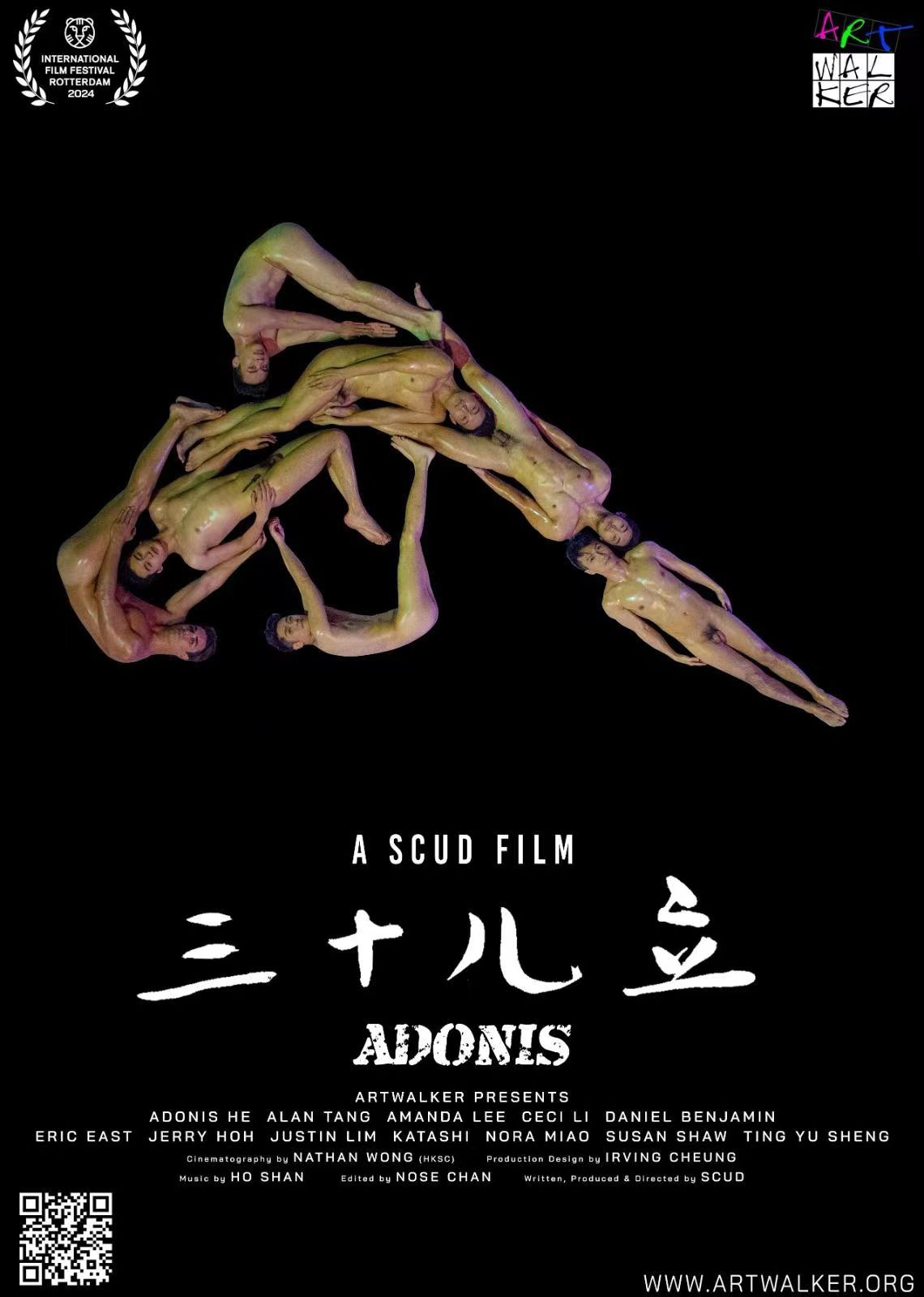
Venture with unparalleled grace, sadness and torment into the realms of desire, dreams and broken hearts in Scud’s Thirty Years of Adonis. A space where human emotions, both vulnerable and raw, are laid naked.
Adonis, a young actor at the Beijing Opera dreaming of stardom and a love that transcends the oceans of time, leaves everything behind and exposes himself to a whole new experience. In his late twenties, he yearns to explore new meaning in his life through the world of the male sex industry. And so he surrenders himself, to daydreams and nightmares alike.
Known for his unflinching exploration of complex themes, Scud continues to push the boundaries of the ways to explore art, raw forms of sexuality and perverse desires, to probe identity and society. Thirty Years of Adonis is another testament to his audacious narratives and directorial prowess, leaving even the most prepared audience thunderstruck.
He navigates the journey of its characters through a landscape of sensuality, self-discovery and self-destruction, challenging norms and offering a blend of provocative storytelling and visual artistry that is as beautiful as it is casually shocking.
<<<
Utopians
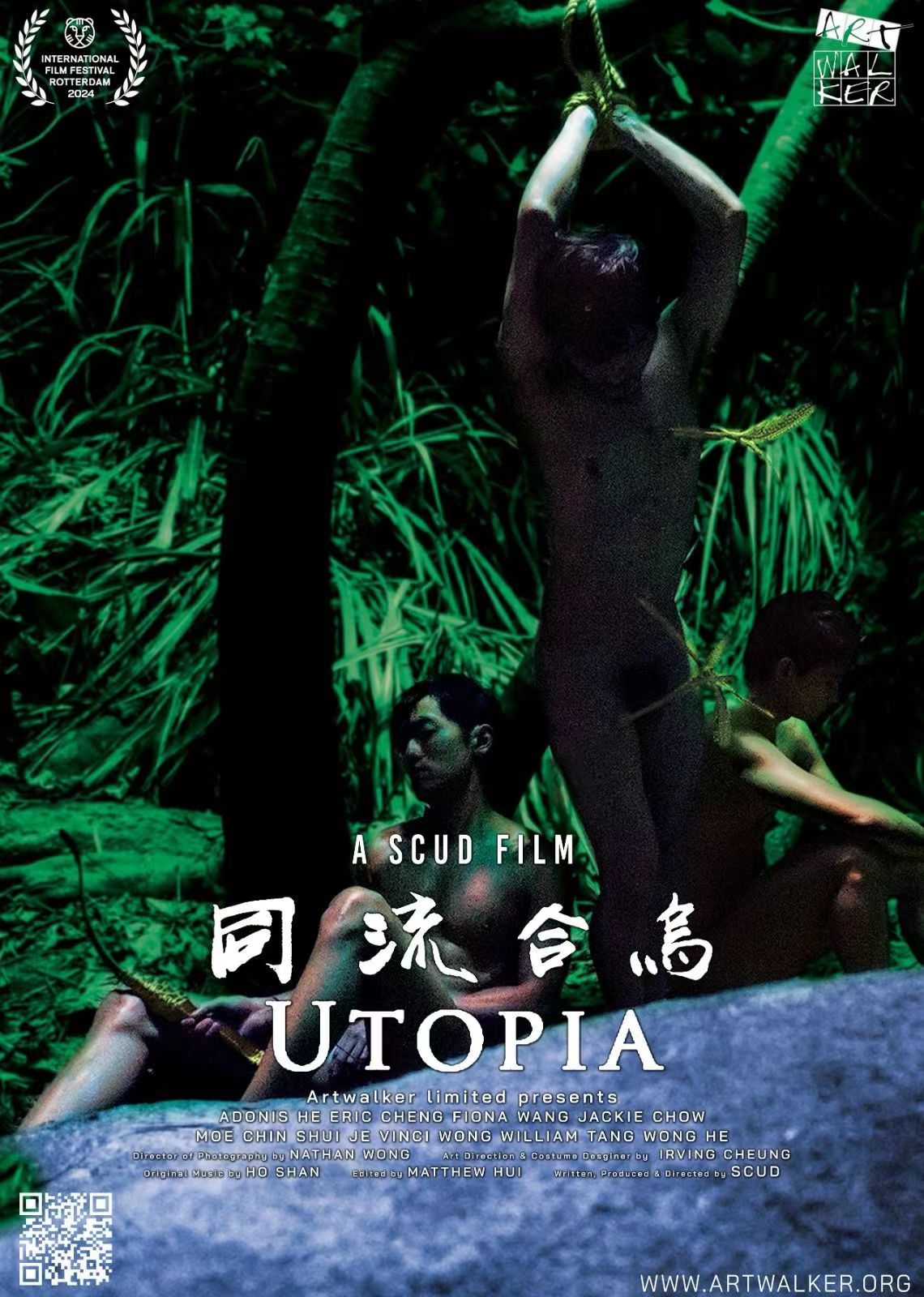
Love and Death meet again in Utopians. Hins, a dreamy student with a passion for literature and a thirst for a deeper understanding of life finds himself overwhelmed by Antonio and Swan, a charismatic teacher and his elegant assistant. Charmed by their love for art and wisdom, Hins plunges into the uncharted waters of spiritual learning and the pleasures of the flesh, taking his religious girlfriend Joey along for the ride.
Utopians resumes Scud’s meditation on the true notion of home and belonging to a place that permeates Permanent Residence(2008), and moves towards the idea that Utopia could be a place on Earth, a safe harbour for the soul to breathe freely – only to find it in Bangkok. In a way foreshadowing Thirty Years of Adonis (2017) and Apostles(2022), his two following films, Scud here places his literary and philosophical fervours into the narrative equation. Moreover, in Utopians, he also lets his cinephilic inspirations fly free, mainly playing around with hints and references to Pasolini and Greenaway.
For those unfamiliar with Scud’s favoured mise-en-scène, the film is also rich with naked people and explicit sex.
>>>
Voyage
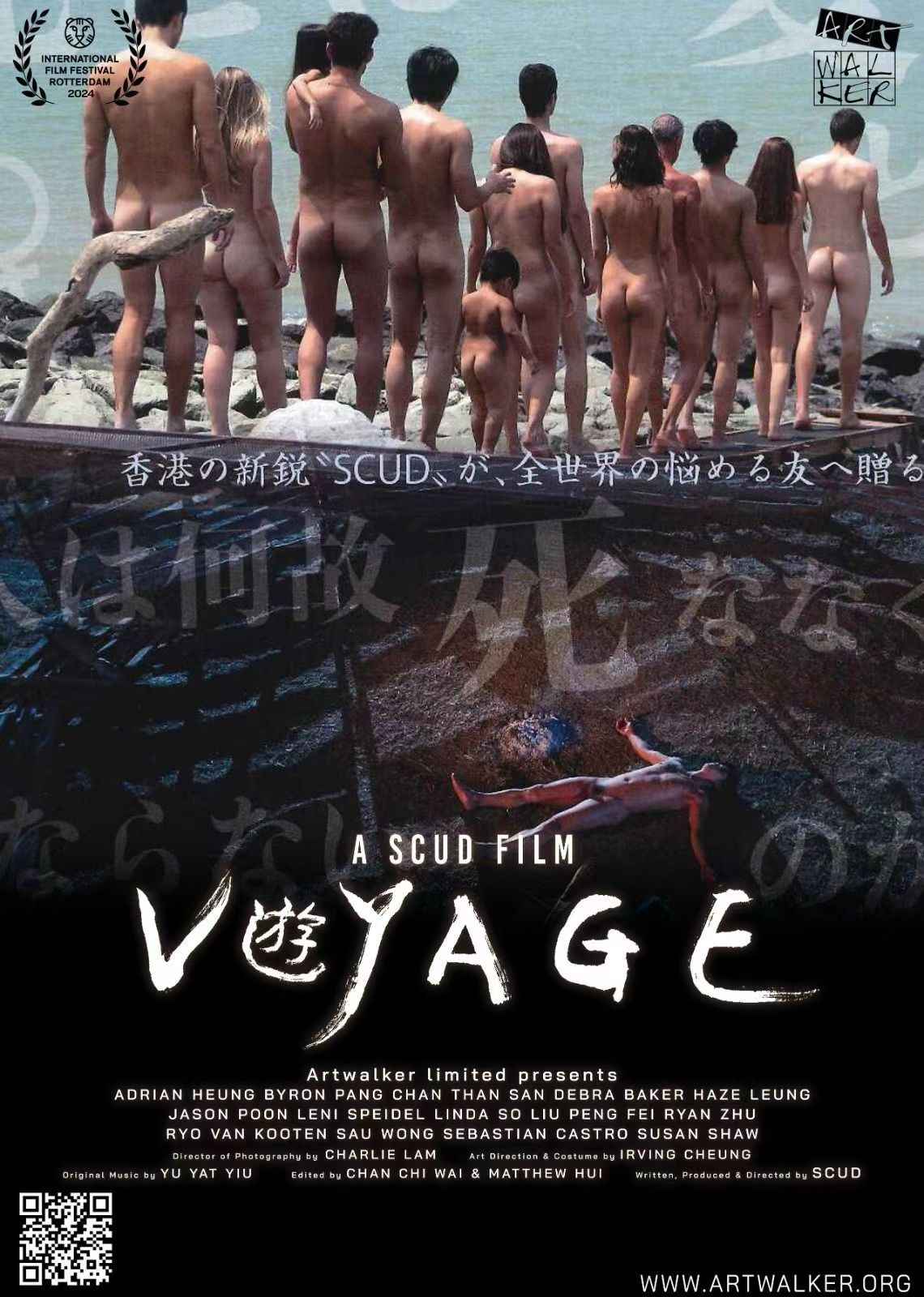
A psychiatrist debating the link between his choice of profession and his mental state, gets on his boat and embarks on a voyage. Grappling with his own depression, he revisits encounters with former patients. His attempt at self-therapy becomes an anthology of short stories, where Yuan (exiled to Inner Mongolia under Mao’s Chinese re-education policy), Ming (a young man with disabilities), Leni (a German columnist coping with the death of her mother) and Sebastian (an artist romantically involved with a young woman in the Netherlands) become the characters.
Voyage is a further cinematic excursion into the depths of the human mind, that offers different perspectives on the realities of depression and delves deep in the search for its source. In doing so a new motif that will become evident in Scud’s later films surfaces – ghosts and the afterlife. The nudity of men stands in for the nudity of souls, and sexual encounters and relationships act as proof of life with distorted undertones. Voyage dances in the space between expressions of radiant vulnerability and absurdity.
<<<
Love Actually… Sucks!
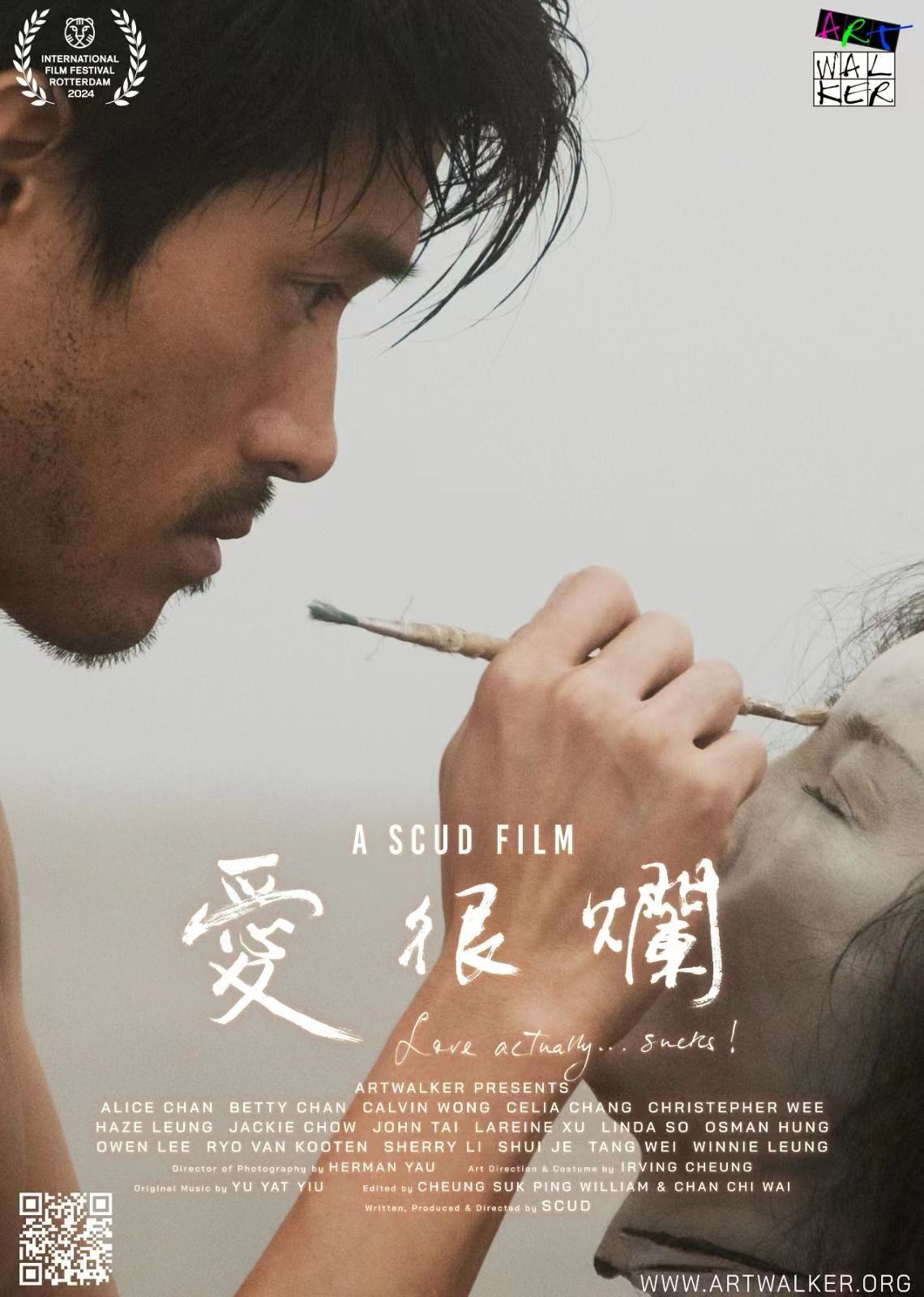
Even if in Love Actually… Sucks! Scud interlaces stories of love and relationships, it becomes immediately apparent that this film bears no easy relationship to Richard Curtis’ 2003 film. As is made clear by the lashings of nudity and sex and a guy wandering along the coast, carrying his lover’s decapitated head. Inspired by six real-life court cases in Hong Kong, the film is a unique existential romance about love that has gone bad, illustrating how love can kind of suck, whilst giving a toast to unconventional love too.
Siblings express their mutual love a little too affectionately, a wedding is spoiled, a married painter has a crush on his male model, a dance school teacher dances more than tango with his student, a lesbian couple have a role-playing issue and an unlucky love triangle ends with death and decapitation. The second of two collaborations with the legendary Hong Kong cinematographer Herman Yau, Love Actually… Sucks! oscillates between myth and ghost story, mixing erotica with crime. While the film and love, are to be taken seriously, Scud’s insistence on keeping it real, his candour and his uncanny eye for singular imagery crackles with unexpected humour.
>>>
Amphetamine
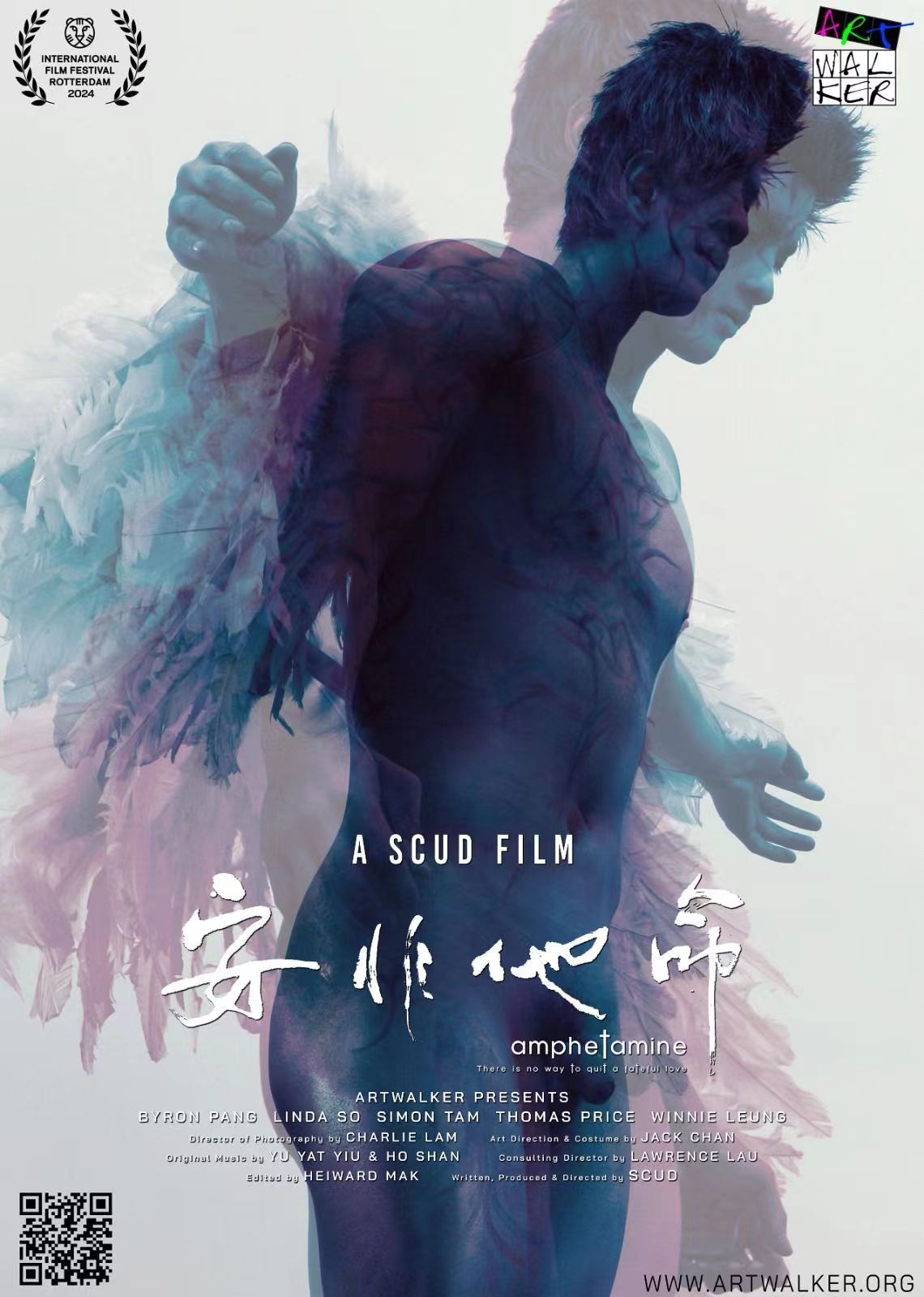
Kafka is a fitness trainer, martial artist and delivery boy working multiple jobs to take care of his mother. His life has never been one where everything neatly falls into place: his father died by suicide when Kafka was young, and most recently, he broke up with his girlfriend. But perhaps meeting the charming young executive Daniel will be the lucky charm that turns the tables.
Once more employing a cast of absurdly beautiful men in cleanly elegant spaces with a fierce, camp attitude, in Amphetamine Hong Kong artist provocateur Scud explores the possibilities of love between people who desperately need it, crave it, believe in it, but actually may not really be capable of it. Kafka and Daniel throw themselves into each other, in the hope of manifesting a love that will heal their wounds from lonesome pasts and free their doubtful minds. Instead, they risk becoming another more dangerous drug to one another.
One of Scud’s most affecting films, Amphetamine is inspired by a close friend who nearly lost his life, and is dedicated to people who find no reason to live other than the love they might find in others. But is this love a true love?

<<<
Permanent Residence
Ivan, a handsome and brilliant IT guy, is coming to terms with his identity and sexuality in Scud’s sophomore feature, Permanent Residence.
Ivan meets Windson at the gym, a man so beautiful and athletic he must be a fantasy. They strike a queer friendship, spending their time together, sparring, travelling, going to beaches and having all sorts of manly fun wearing nothing but Adam’s robes. There is only one catch. Windson is straight and draws a strict boundary when it comes to sex, and so Ivan’s odyssey begins.
Scud draws on his own personal experiences to continue to challenge the usual image of queer men in Hong Kong cinema. Promoting camp to higher art, Permanent Residence continues to showcase the Asian male body so ostentatiously celebrated in City Without Baseball(2007). This film marks one of two collaborations with the Hong Kong legend Herman Yau as director of photography and the beginning of Scud’s gusto for self-referentiality, a detail which fortifies the fictional world Scud has built for his protagonist. A world where beautiful fantasies become reality, but one that has no immunity from pain or heartbreak, provoking contemplations of life, love, death and belonging.
 >>>
>>>
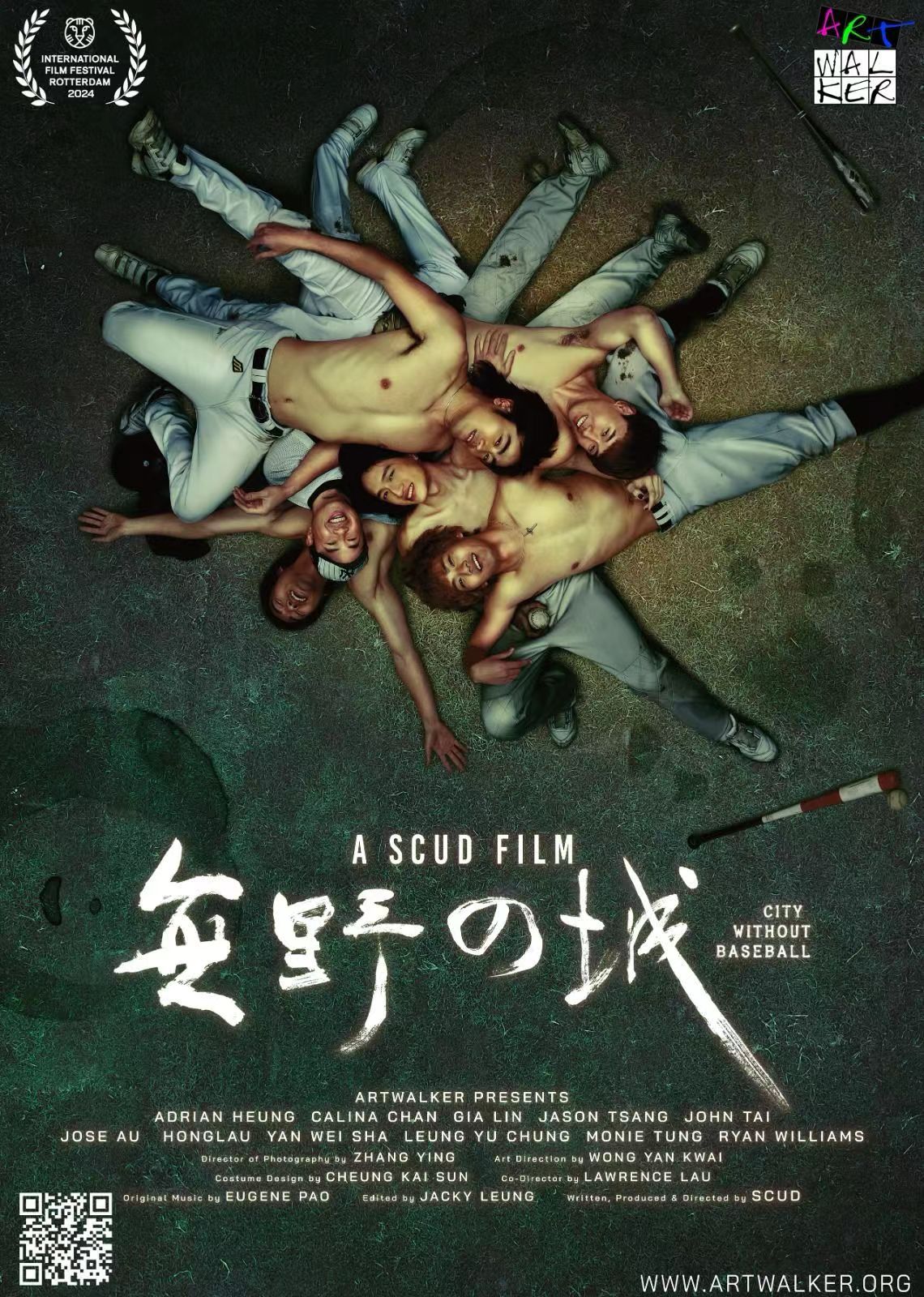
City Without Baseball
Sexuality, suppressed emotion and urban alienation occupy the minds of the Hong Kong baseball team, searching for their place in a city where baseball culture is non-existent. Who are these invisible players if no one is cheering them on?
Stripping bare the cast of real athletes, City Without Baseball is a postmodern youth drama and a sports film, that plays cheekily with each genre’s iconographies. The handsome and charismatic protagonists play alongside camaraderie, crushes, love, competition and homoeroticism that seep beyond the locker room in a strikingly bare manner that marks a new approach to queer films in Hong Kong.
Co-directed by Lawrence Lau Kwok-Cheong, Scud’s directorial debut invites viewers to reflect on the complexities of human relationships, as well as the courage required to break free from societal expectations. Laying out the blueprints for his later work, City Without Baseball blurs the boundaries between fiction and documentary, and fictionalises the lives of the baseball players navigating the challenges of youth in the universal quest for acceptance in a society that so often sidelines individuality.